
How to get started.
A little while ago, someone told me “You are a walking toolbox”. That made me smile. It is true, I have grown my personal repertoire over years of practice. I can grab a tool and play with it. My collection of gears is my treasure.
Tool: method, interaction structure, participation technique.
Repertoire: the tools from your repertoire you master.
A glimpse into my equipment
In my toolbox, I find a mix of methods from different schools of collaboration, such as Art of Hosting, Theory U, or Liberating Structures. Each school has its philosophy, vibe, and flair, all are based on a participatory approach towards sharing and learning and can include smaller or bigger groups. For example, ‘coffee approaches’ (see my latest blog post), Open space, formats for peer support, visualisation exercises, etc. My work box makes me feel well-equipped for all sorts of gatherings, from strategy workshops to brainstorming and ideation sessions to knowledge-sharing or networking events.
You do not need to be a professional facilitator to have your own toolkit.
So how can you build yours?
Get your personal starter box
Start small and expand it. Observe what works and what doesn’t.
Starting small means trying a first method, testing it, and seeing how it works for you, in your context, with your team, groups, or networks. If you are satisfied, keep exploring and experimenting.
Over time, you will discover which participation techniques are your (and your team’s) favourites and why. There must be reason. And this is interesting to explore.
Know what you are looking for
Most toolboxes are smart and help you select a suitable method depending on your goal.
- Generate, or improve solutions.
- Share ideas, know-how, or experiences.
- Strategize.
- Analyse, diagnose or debrief.
- Plan.
- Get help or give help.
Learn how to use them
Even though tools are great helpers you need to know how to use them. They cannot do wonders. Tools are tools not more than that.
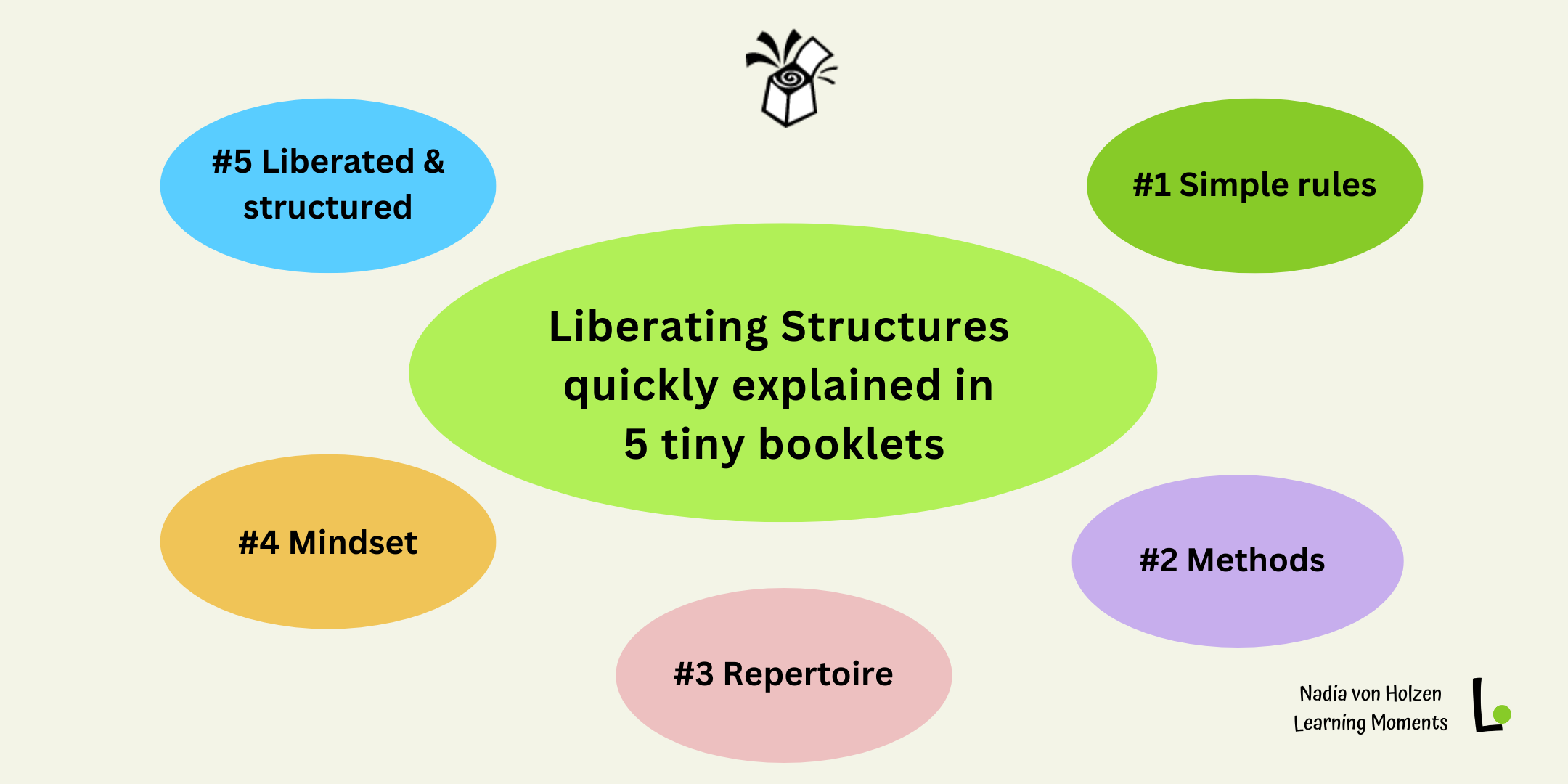

If you would like some advice on tools, let’s talk. Or discover Liberating Structure with the “5 tiny booklets Liberating Structures quickly explained”.
Best wishes, Nadia
Related stories
- Liberating Structures: From toolbox to repertoire to ensemble
- Eleven arguments why investing in the facilitation skills of your team is a good plan
- The magic power of Liberating Structures – a look beyond the toolbox into the principles
Painting: Nadia von Holzen
 Learning Moments
Leave a comment