Liberating Structures in practice — inspiration from the new storybook
I believe in conversations. I am moved when I see people huddled together, immersed in deep discussion in workshops I facilitate — those moments of sharing, listening, and thinking together.
Meaningful conversations can happen on their own. But often they don’t. In most meetings, a few people talk, others stay silent, and the best ideas never surface.
That’s a pity. A waste. Absolutely not necessary.
With a bit of help, good conversations can happen — and maybe that’s my contribution to the world. A little bit of caring, structure and support to create the space for conversations to grow.
One of my trusted allies in this adventure is Liberating Structures — a set of simple methods that transform how groups meet, think, and work together. If you know them, you know what they can do.
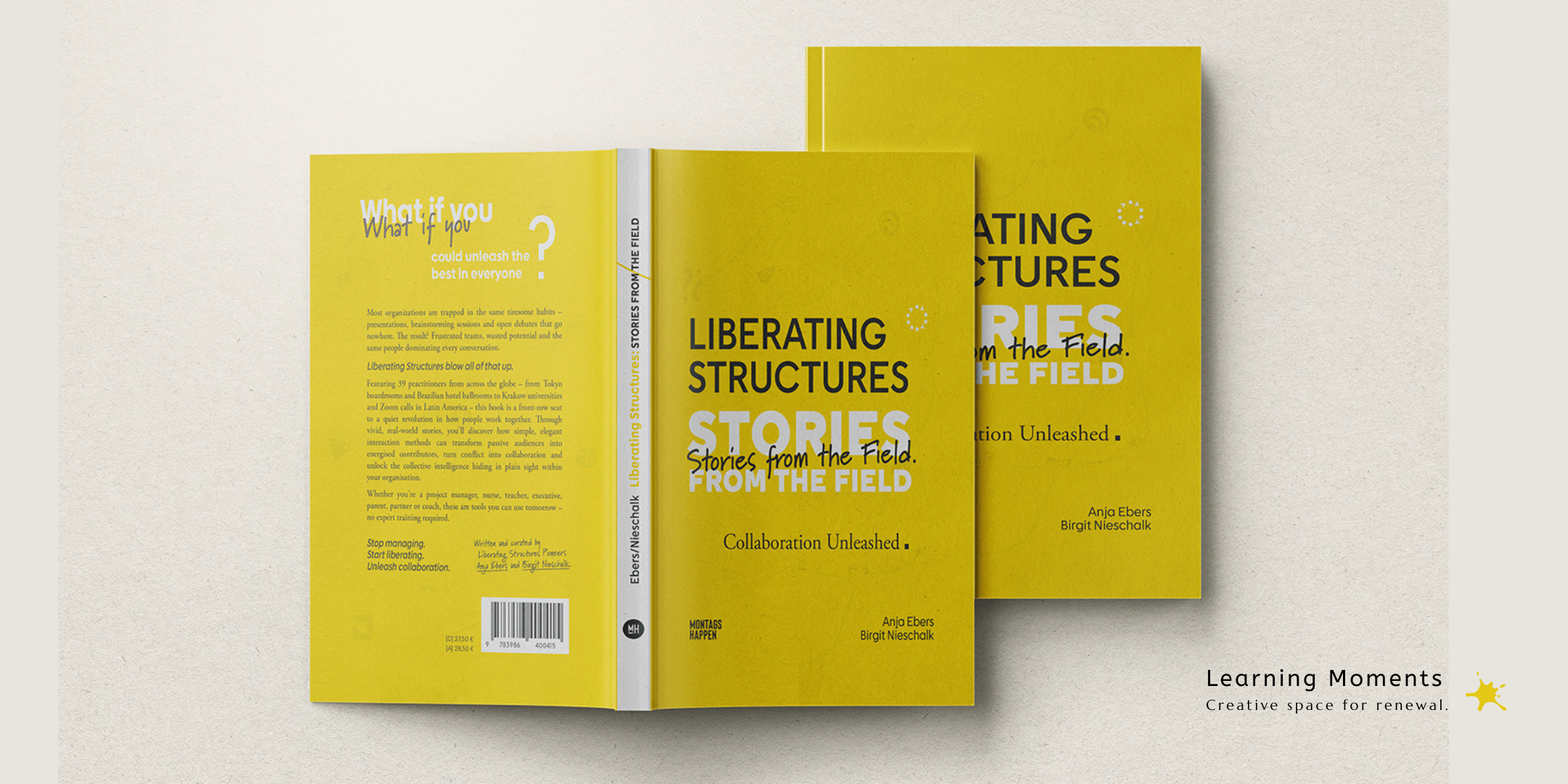
Liberating Structures: Stories from the Field – a new storybook that shows what this looks like in real life — 30 inspiring stories from practitioners across the globe, in workshops, organisations, communities, and conversations that mattered.
Why stories?
The Liberating Structures methods are freely available at liberatingstructures.com and https://liberatingstructures.info/liberating-structures/. But stories do something different. They show the practice in action — the human experience, the unexpected moments, the challenges, and the impact.
I’ve seen it myself: conversations full of discovery, laughter, and genuine connection. People listening to each other and sometimes even hearing each other differently. Relationships growing while meaningful work gets done.
Conversations that lead somewhere.
30 stories from practitioners bringing Liberating Structures to life
Three of them mine.
I’m proud and happy to be one of the co-authors, contributing three stories of my own — moments from my practice that stayed with me. I’d love for you to have a look at them.
- In the TRIZ story, Aryanti Radyowijati guides her group through three conversations that help them flip the problem, reveal the behaviours blocking success, and identify possible next steps. Together with Nur Rokhmah Hidayati, Anna Page and Kim Caarls, I’m honoured to share Aryanti Radyowijati’s legacy and inspiration
- In the second story, Nur Rokhmah Hidayati uses Ecocycle Planning with her team to structure their annual review, make work visible, and decide what to grow, transform, or let go of.
- And finally, in the third story, I use What, So What, Now What? to structure end-of-day reflection, surface shared insights, and turn collective experience into a shared manifesto during a four-day workshop.
Explore these 3 and the other 27 stories. Each one is a window into a different world, a different context, a different conversation that mattered.
The book is waiting for you.
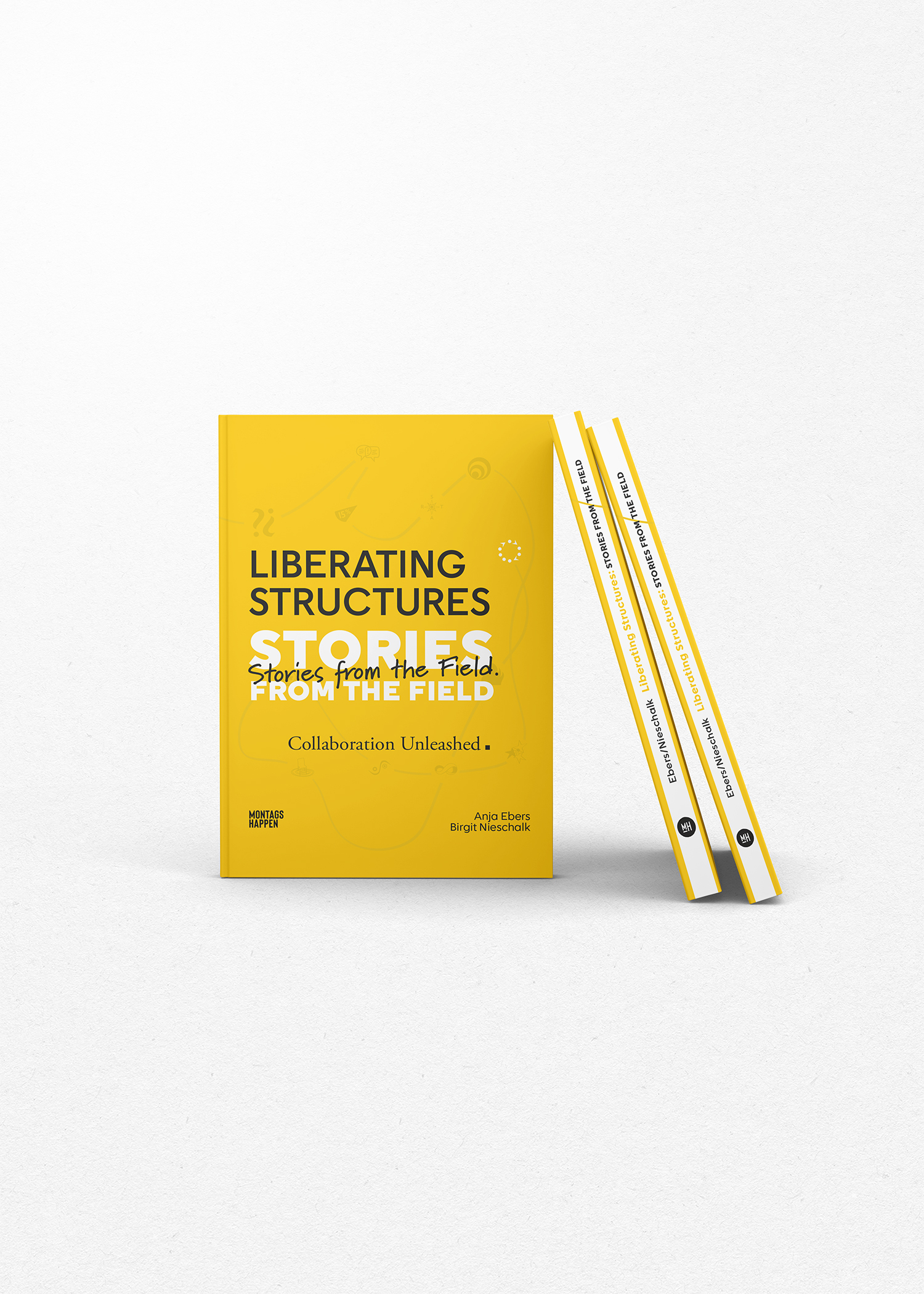
Liberating Structures: Stories from the Field – Unleash Collaboration.
Get the book here — signed by either Anja Ebers or Birgit Nietschalk, through Verlag Montagshappen, or on Amazon.
Who in your network needs this book right now? Share with friends and colleagues – carry the stories into the world.
💬 What’s your story with Liberating Structures — have you tried them yet?
Share in the comments, I am curious.
The bit at the end
Exciting events on the horizon to support your exploration:
- What if the most rebellious thing you could do right now is pause?
Pause with us—find out more about Rebel with a Pause here and join us for a free monthly 30-minute pause. - Curious to experience Street Wisdom for yourself — inspiring, surprising, and quietly powerful? Reach out, and let’s wander with wonder through the streets, alleys, and bridges of Alkmaar or Amsterdam. Learn more about Street Wisdom here.
- Join the next Unhurried Conversation—a space to slow down, listen, and connect. We meet on the 2nd Monday of every month. It’s free, and you’re warmly welcome. Sign up here.
- For more Learning Moments, subscribe to my newsletter and get timely updates straight to your inbox.
Reach out, I’m always open for a chat.
Creatively,
Nadia
P.S.The paintings featured on the blog are my own.


Leave a Reply